Chapter 3 Enterprise Blueprint • Single-Lot Unit Economics
How to Open a Village Vegetable Collection Center That Pays Same-Day
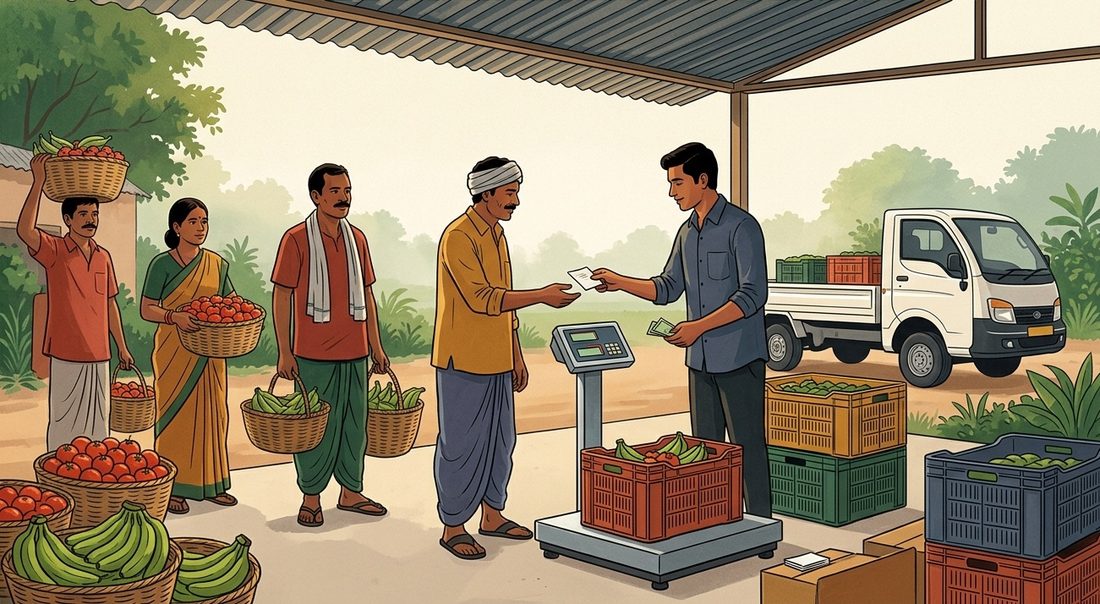
Capturing the sorting and crate-aggregation margin at the farmgate with a public digital scale and instant UPI settlement.
Estimated Starting Equipment / Capex
₹65,000 – ₹1.5 Lakh (150-kg digital platform scale with pole display, 100 stackable plastic crates, shade tarpaulin/table, thermal slip printer)
Single-Lot Validation Batch
40 plastic crates (800–1,000 kg) of tomatoes, green bananas, or gourds
1. How the Margin Works (The Missing Step)
Smallholders lose 15%–25% of value to bruised sack transport, ungraded lots, and 10-to-15-day mandi payment delays. By weighing in public view, sorting into Grade A/B plastic crates at the village gate, and paying same-day against a confirmed regional buyer order, you earn a fixed per-kg aggregation and sorting commission without taking overnight wholesale price risk.
2. The Hard Stop-Loss Rule
Never load a pickup truck without a confirmed buyer floor price for that morning, and stop if crate loss/shrinkage exceeds 2.5% between village scale and buyer dock.
3. Eligible Government Subsidies, Loans & Technical Labs
Agriculture Infrastructure Fund (AIF 3% interest subvention for primary collection & assaying centers), SFAC FPO Equity Grant, e-NAM farmgate collection incentives.
Frequently Asked Questions
How do you avoid losing money when mandi vegetable prices crash?
A collection door should operate on a back-to-back sorting spread (fixed ₹1.50–₹2.50/kg grading + crate handling fee against morning institutional/wholesaler quotes) rather than buying unhedged inventory for speculative resale.
Why are stackable plastic crates critical for unit economics?
Jute sacks crush the bottom 12%–18% of ripe tomatoes during rural transit. Reusable ventilated plastic crates cut transit bruising below 2%, immediately paying for their rental within 8 to 10 trips.
Get the Complete Step-by-Step Ledger, Vendor Specs & 97-Institution Directory
Every chapter in The Missing Step includes the complete single-lot cost table, buyer contract checklist, 30-day launch calendar, and matching funding schemes from The Missing Step Directory.
Explore All 11 Agribusiness Blueprints
- Ch 2: Shared Makhana Processing Shed
- Ch 4: Crate-Level Solar Cold Room
- Ch 5: Custom Hiring Seed Drill by the Acre
- Ch 6: Operate the Agri-Drone Someone Else Bought
- Ch 7: Sensors That Prevent One Total Loss
- Ch 8: Counted Fingerlings, Nearer Feed & Ice
- Ch 9: Seed Multiplication for a Contracted Buyer
- Ch 10: Digitize the Milk Chain That Already Pays
- Ch 11: Keep the Small Animal Alive, Then Sell It
- Ch 12: Sell a Changed Practice, and the File Someone Pays For