Chapter 4 Enterprise Blueprint • Single-Lot Unit Economics
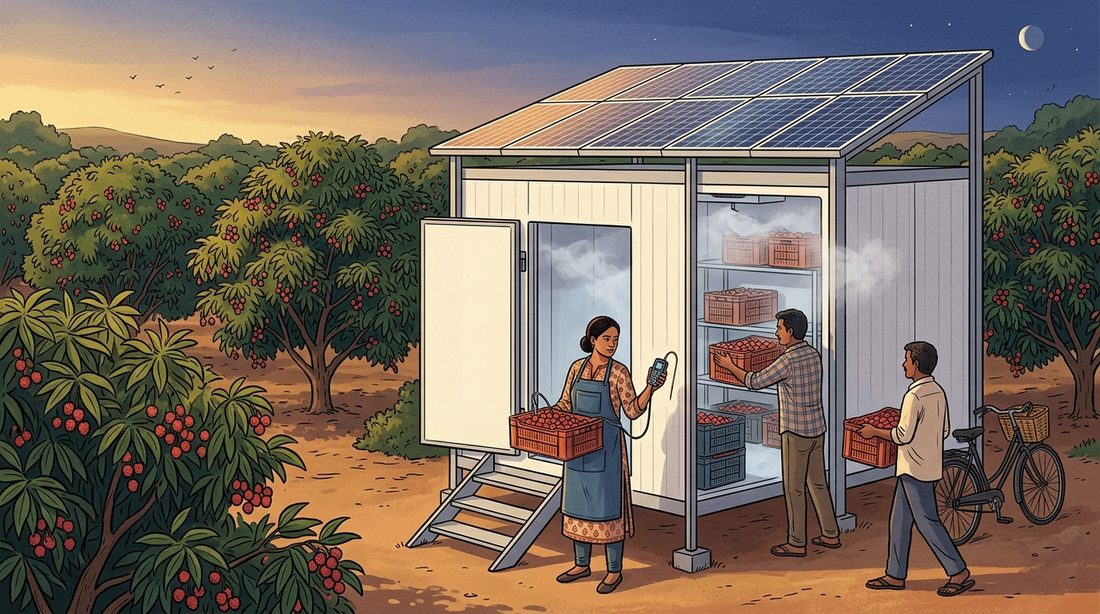
How to Rent Walk-In Solar Cold Storage by the Crate in Rural India
Unit economics of 5–10 MT decentralized solar cold rooms at orchard and mandi edges rented per plastic crate per day.
Estimated Starting Equipment / Capex
₹8.5 Lakh – ₹15 Lakh before subsidy (5–10 MT insulated walk-in chamber, rooftop solar PV + thermal/phase-change backup, humidity & temperature logger)
Single-Lot Validation Batch
150–250 crates across peak horticulture harvest windows (litchi, tomato, okra, leafy greens, marigold)
1. How the Margin Works (The Missing Step)
Small growers cannot lease an entire cold storage chamber for 6 months, but they readily pay ₹8–₹15 per plastic crate per day to remove field heat during the first 6 hours after harvest or to hold produce over a 48-hour mandi glut.
2. The Hard Stop-Loss Rule
Do not pour concrete until pre-season signed crate-booking commitments from local growers/traders cover at least 55% of peak-month capacity across two distinct crop seasons.
3. Eligible Government Subsidies, Loans & Technical Labs
Mission for Integrated Development of Horticulture (MIDH / NHB 35%–50% capital subsidy on packhouses & cold rooms), AIF 3% interest subvention, SELCO / state clean-energy livelihood grants.
Frequently Asked Questions
How many months per year must a rural solar cold room run to break even?
A single-crop cold room (e.g., 3 weeks of litchi alone) struggles to pay back capital. Combining at least three seasonal calendars—summer litchi/mango, monsoon/autumn vegetables, and winter seed potato or flowers—pushes utilization past 180 days/year.
Get the Complete Step-by-Step Ledger, Vendor Specs & 97-Institution Directory
Every chapter in The Missing Step includes the complete single-lot cost table, buyer contract checklist, 30-day launch calendar, and matching funding schemes from The Missing Step Directory.
Explore All 11 Agribusiness Blueprints
- Ch 2: Shared Makhana Processing Shed
- Ch 3: Same-Day Vegetable Collection Door
- Ch 5: Custom Hiring Seed Drill by the Acre
- Ch 6: Operate the Agri-Drone Someone Else Bought
- Ch 7: Sensors That Prevent One Total Loss
- Ch 8: Counted Fingerlings, Nearer Feed & Ice
- Ch 9: Seed Multiplication for a Contracted Buyer
- Ch 10: Digitize the Milk Chain That Already Pays
- Ch 11: Keep the Small Animal Alive, Then Sell It
- Ch 12: Sell a Changed Practice, and the File Someone Pays For