How do I start a makhana (foxnut) processing and grading business in Bihar or eastern India?
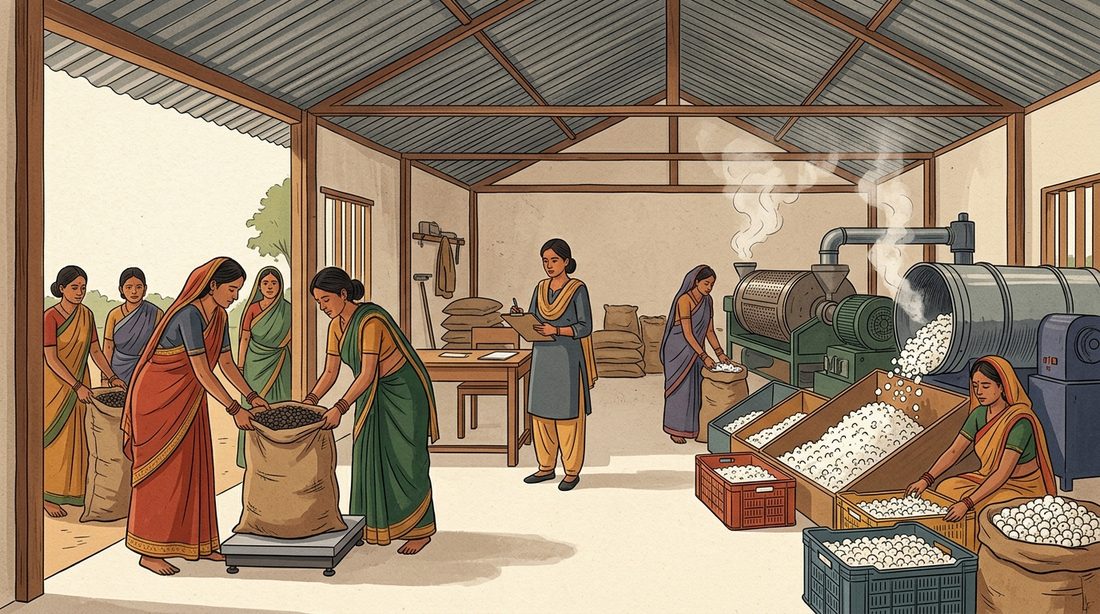
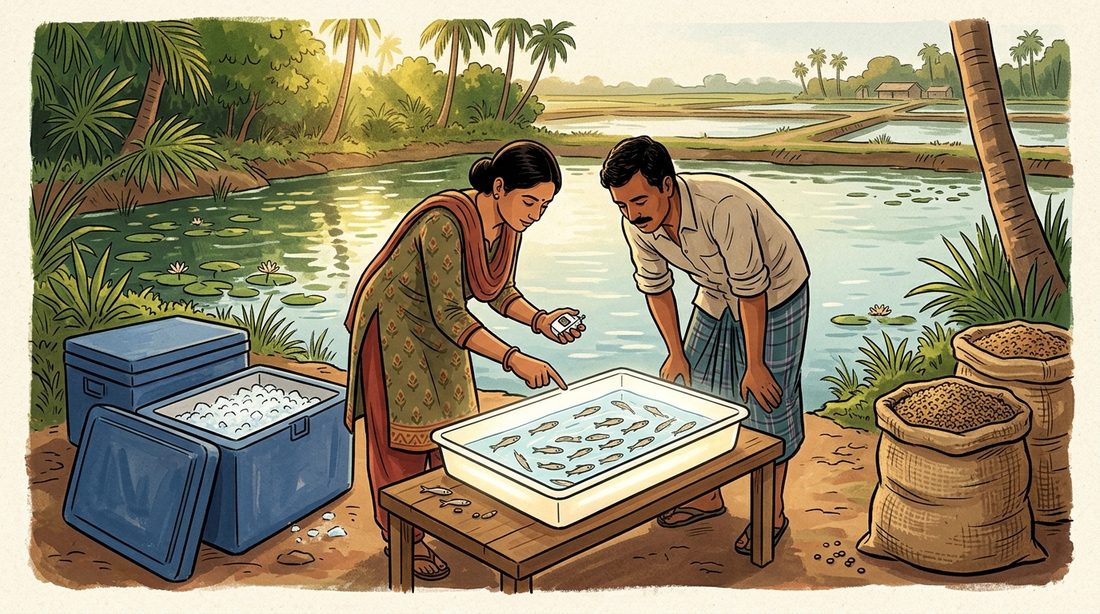
Instead of buying land or farming ponds first, start with a shared makhana popping and 4-sieve grading shed (Chapter 2 of The Missing Step). Raw black pond seed sells at a steep discount when ungraded. By weighing raw seed on a public digital platform scale, roasting/popping in a clean shed, and sorting popped lava through four sieve grades (including 12mm+ premium grade), an operator earns a transparent per-kilogram processing fee or grade-spread margin. Eligible capital subsidies include PMFME (35% credit-linked capital subsidy up to ₹10 lakh per unit) and the Bihar Makhana Development Scheme.
What is the PMFME 35% subsidy and how can an FPO, SHG, or food entrepreneur claim it?
The PM Formalisation of Micro Food Processing Enterprises (PMFME) scheme under the Ministry of Food Processing Industries (MoFPI) provides a 35% credit-linked capital subsidy (up to ₹10 lakh for individual/micro units, plus ₹40,000 per SHG member in seed capital for working capital and small tools). To apply, prepare a single-lot trial ledger, quotation for plant & machinery, FSSAI registration, Udyam Registration, and the 10-document bank packet detailed in The Missing Step Directory.
How does the Agriculture Infrastructure Fund (AIF) 3% interest subvention work?
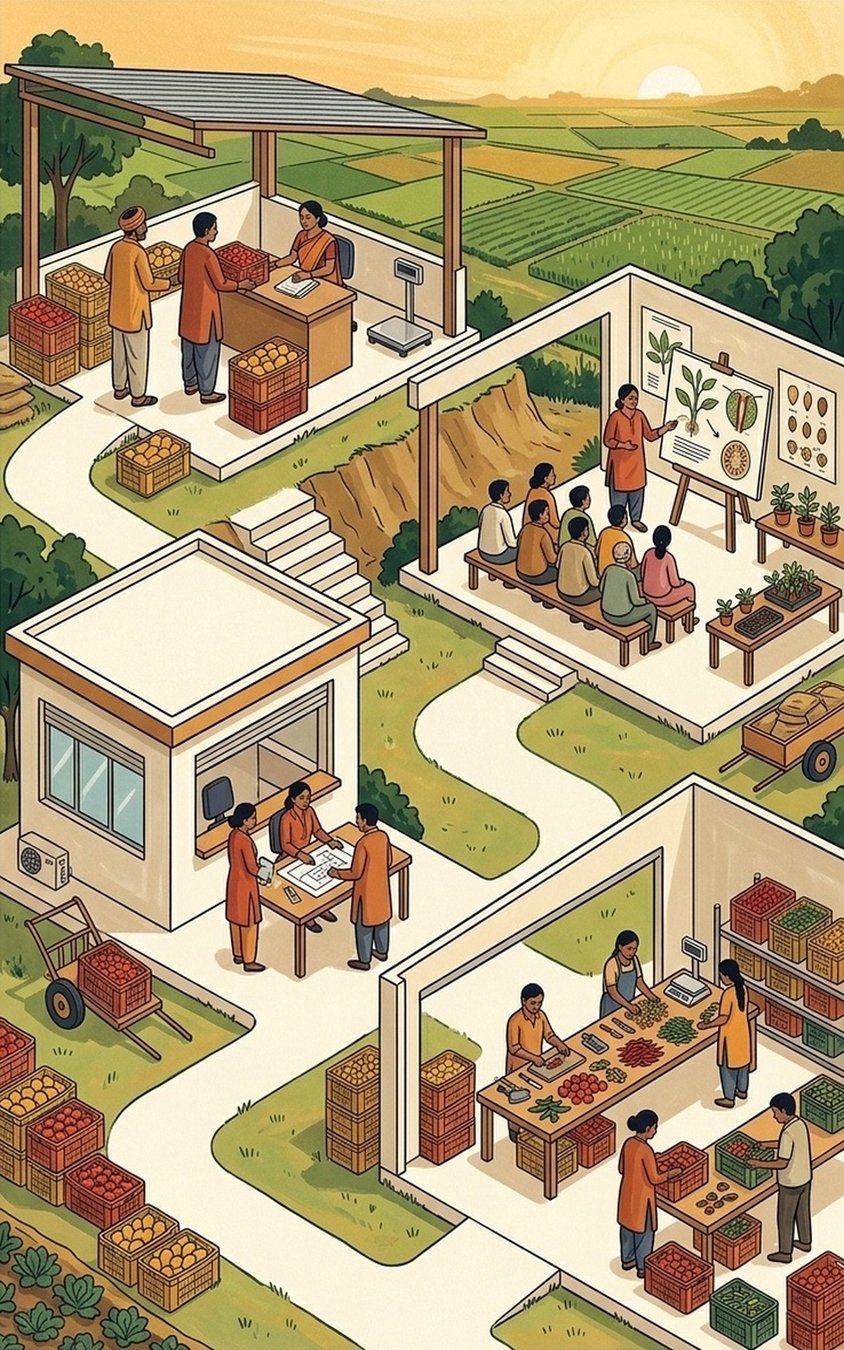
Under the Agriculture Infrastructure Fund (AIF), banks and NABARD provide term loans up to ₹2 crore for post-harvest infrastructure—including primary processing sheds, collection centers, assaying/grading units, solar cold storage rooms, and custom hiring centers—with a 3% per annum interest subvention for up to 7 years and CGTMSE credit guarantee coverage on loans up to ₹2 crore.
How does a same-day vegetable collection center make money without taking mandi price risk?
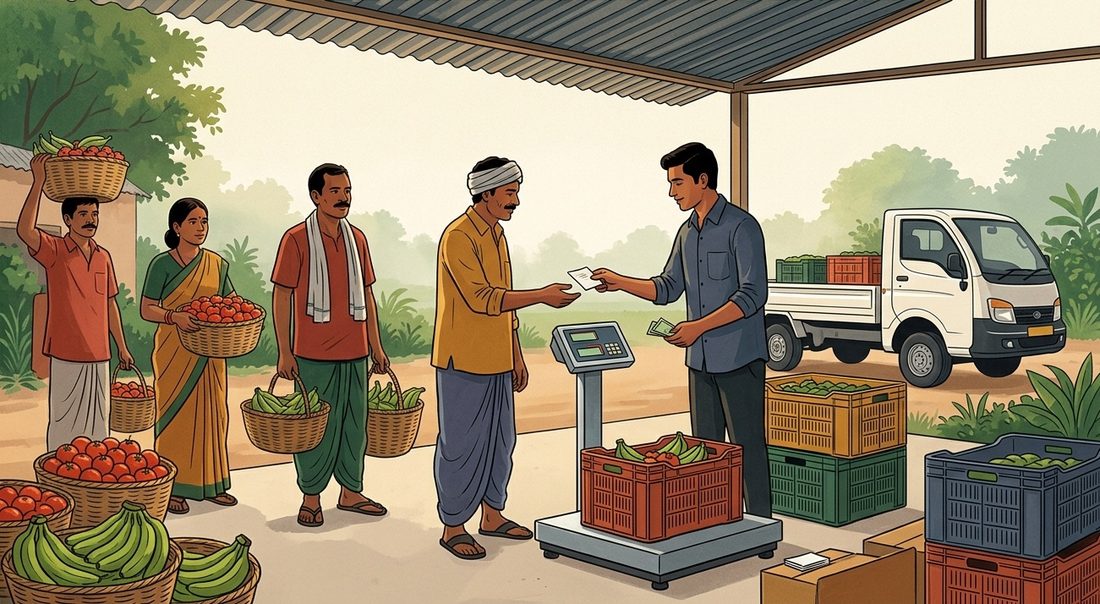
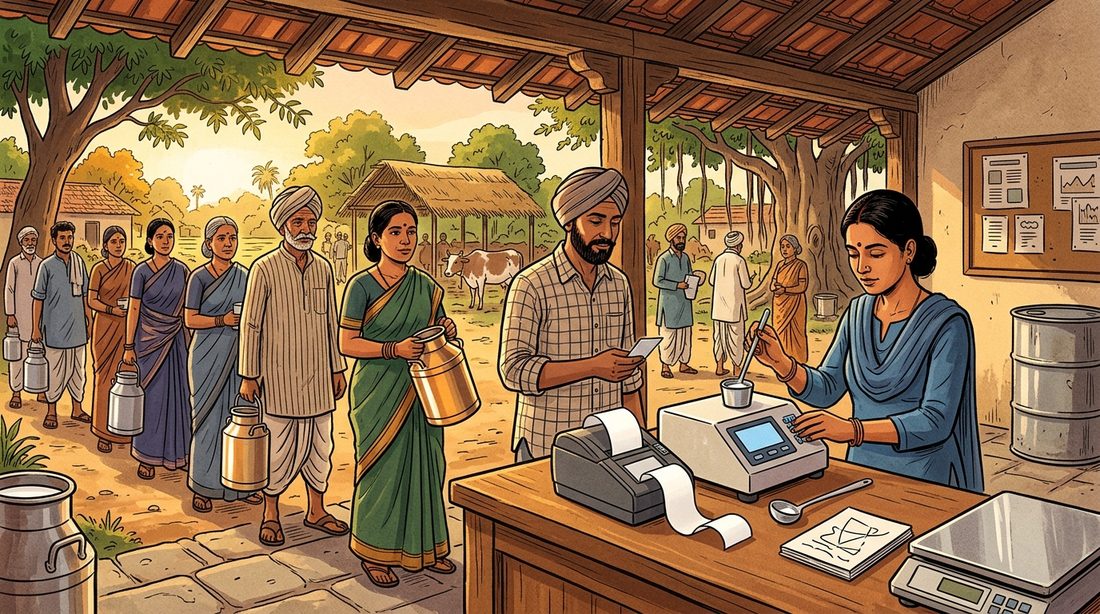
As detailed in Chapter 3 of The Missing Step, smallholder vegetable growers often wait 7 to 15 days for mandi commission agents to settle cash. A village collection center that weighs tomatoes, bananas, or gourds on a public digital scale, grades them into stackable plastic crates, and pays the farmer the same day via UPI captures a predictable sorting and aggregation fee from institutional buyers without speculating on overnight wholesale price swings.
Is a walk-in solar cold storage room profitable for small farmers and FPOs?
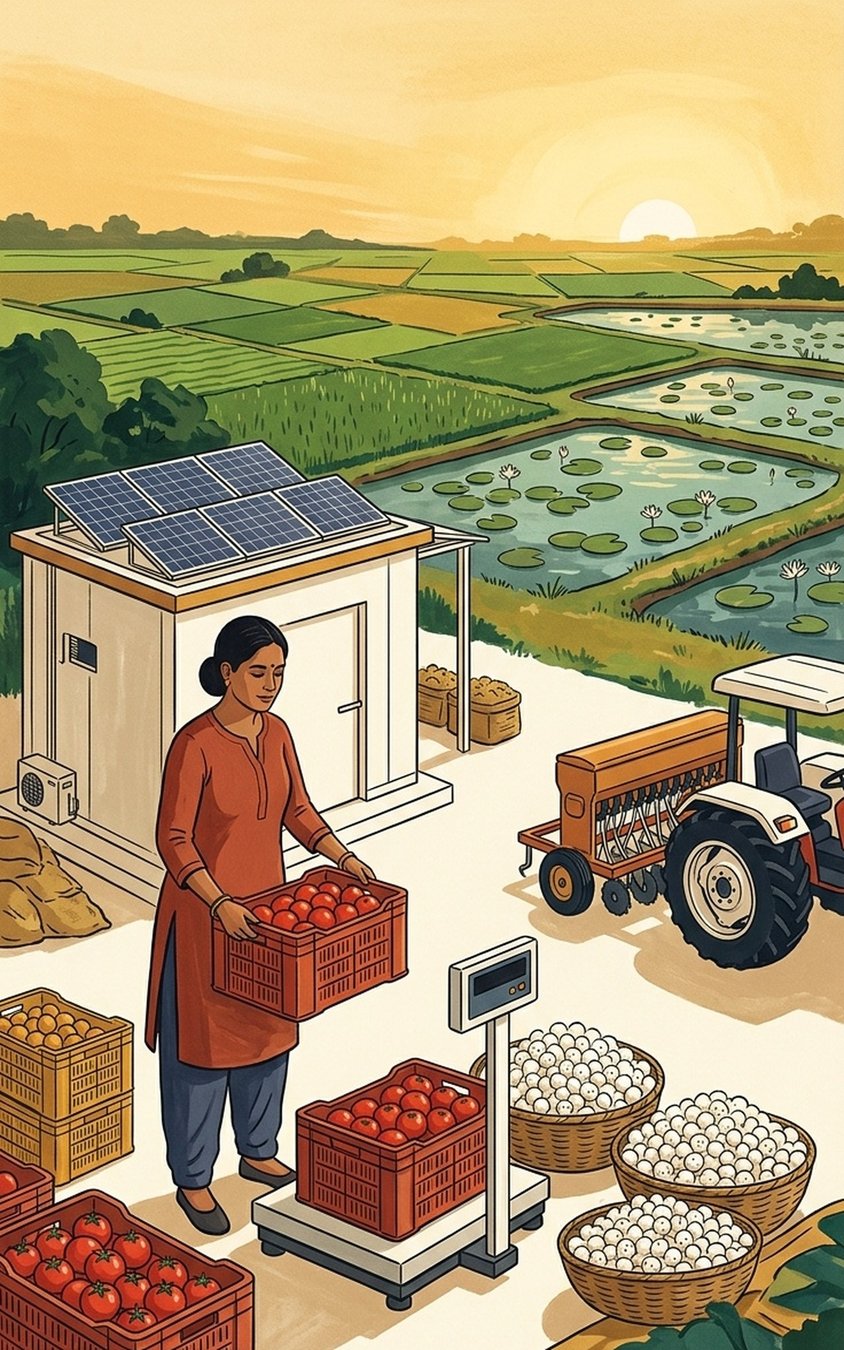
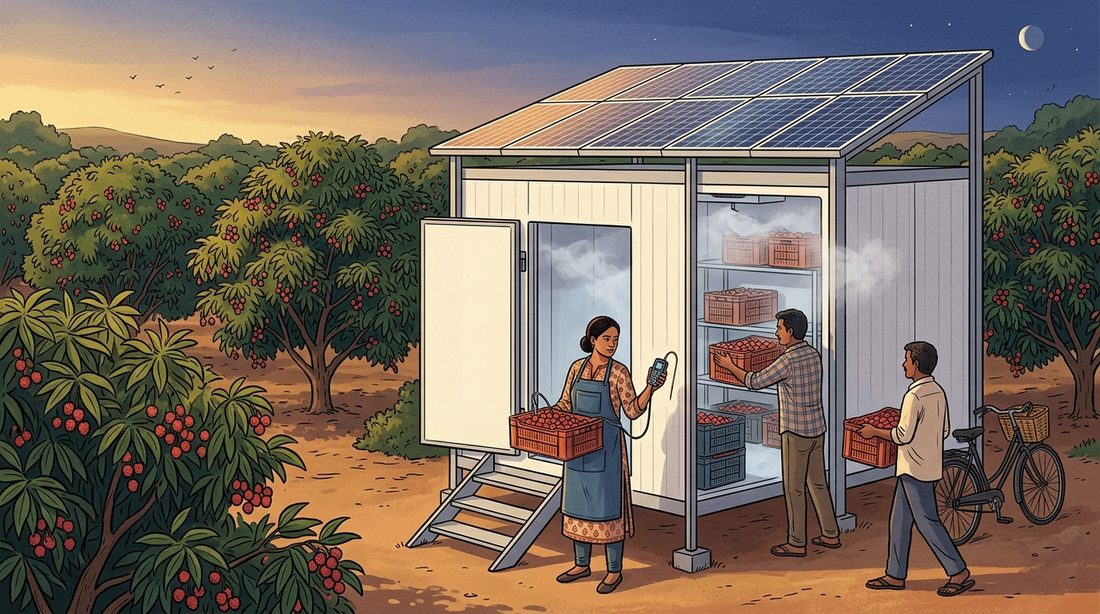
A solar-powered modular cold room (5 MT to 10 MT capacity) placed at an orchard or vegetable aggregation point becomes viable when rented by the plastic crate per day rather than requiring a single grower to lease the whole chamber (Chapter 4). Combined with Horticulture Mission (MIDH) or AIF subsidies, crate-by-crate rental during peak litchi, tomato, and leafy-vegetable harvests covers operating maintenance and seasonal payback.
Which incubators provide up to ₹25 lakh seed grants for agribusiness startups in India?
Under the Ministry of Agriculture's RKVY-RAFTAAR scheme, Knowledge Partners and RKVY-RAFTAAR Agribusiness Incubators (R-ABIs)—including Pusa Krishi (ICAR-IARI), a-IDEA (ICAR-NAARM), BAU Sabour (SABAGRIS), RPCAU Pusa, IIT Kharagpur, IIT BHU, CCS NIAM Jaipur, and MANAGE Hyderabad—offer up to ₹5 lakh under the Pre-Seed (Idea) stage and up to ₹25 lakh in grant-in-aid under the Seed Stage (SAAYA/Ankur) for validated rural and agritech ventures. All 97 verified institutions and contacts are listed in The Missing Step Directory.
What are the 10 documents required in a bank loan or grant packet for an Indian food or farming business?
Every bank branch manager, NABARD officer, and incubator committee looks for the same 10 core papers: (1) One-page business summary & stop-loss sheet, (2) Entity registration (Udyam / FPO / SHG / Proprietorship), (3) PAN & Aadhaar KYC, (4) 6-month bank statement showing real trial transactions, (5) Site lease or land possession proof, (6) Two vendor quotations for machinery/equipment, (7) FSSAI / statutory license, (8) Single-lot trial ledger proving unit margin, (9) Buyer off-take letter or sample invoice, and (10) Promoter contribution proof (10%–25%). Test your readiness interactively at /bank-packet.